Treatment Abroad for Iraqi Children: The TAZC Archive
Explore TAZC’s completed Iraqi children’s medical program and the wider meaning of specialist care, follow-up, and family participation in a child’s care.

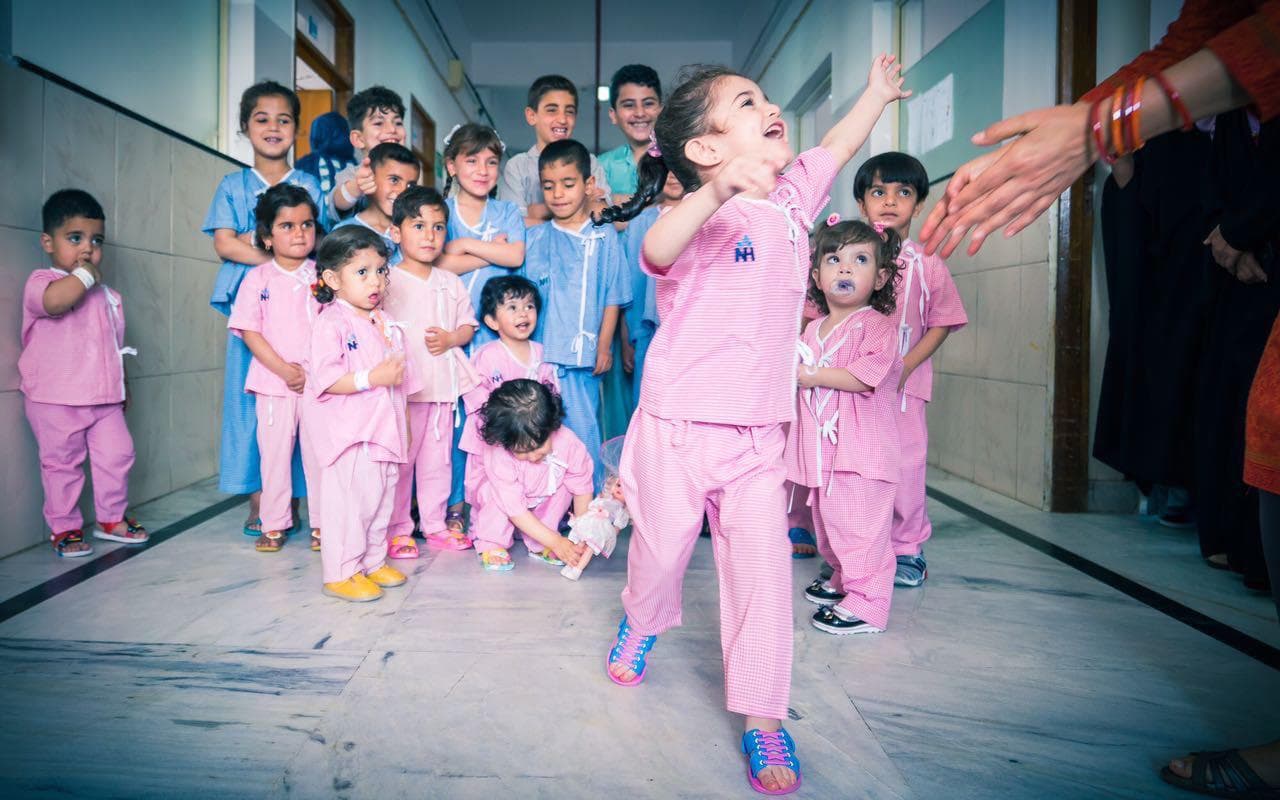
AI-generated editorial illustration; it does not document real people or field activities. Created on 24 September 2026.
Treatment Abroad for Iraqi Children is part of TAZC’s medical archive. Reading that experience through a child’s perspective raises questions beyond a destination: what kind of care is involved, how can a family understand it, and what does continuity mean after a hospital visit? This article connects the documented program with general principles of child-centered care, while keeping the historical record distinct from services available today.
Treatment Abroad for Iraqi Children: the documented record
The TAZC program archive lists the initiative as completed for 2005–2018. It reports treatment for more than 1,300 Iraqi children with congenital heart disease through a partnership with Narayana Health City in Bangalore, India. The figure is attributed to the charity and belongs to that period. The page provides archival material and a route for questions about the program’s legacy.
Naseer Shamma’s official project page identifies 2005 as the initiative’s founding year and describes medical and humanitarian assistance for Iraqi children with congenital heart defects. That source helps establish the purpose of the initiative; the charity’s own archive provides the defined program period used here.
Understanding the medical context without reducing the child to a diagnosis
WHO’s congenital disorders fact sheet, dated 27 February 2023, explains that these conditions develop before birth and may be identified at different stages. It identifies heart defects among important congenital conditions and describes the role of specialist care and follow-up. Understanding the term helps readers recognize the program’s focus while leaving each child’s particular needs to the clinical team responsible for their care.
For an archival account, the distinction is important. A photograph may show a hospital setting, but it cannot explain a diagnosis, a clinical decision, or a later outcome. A respectful account should allow the medical record to remain private while making the public program understandable. The child’s experience deserves more care than a simplified label such as “a case sent abroad”.
Access to specialist care is a broader challenge
The policy brief The Invisible Child, published by PMNCH on 17 June 2026, edited by Children’s HeartLink and Global ARCH, describes unequal access to diagnosis, treatment, and lifelong care for childhood-onset heart disease. It argues for stronger specialist capacity and services. This global perspective frames access as a question about health-system capacity as well as an individual family’s journey toward care.
Seeing the journey from the family’s side
WHO’s people-centered services framework treats individuals, families, and communities as participants in care. It emphasizes services that connect across different settings and respond to people’s needs and preferences. Applied as a way of thinking about a cross-border journey, this directs attention to understandable information, coordination between teams, and the family’s perspective. The central concern is whether the family can experience care as a connected journey rather than a set of disconnected encounters.
There are several distinct dimensions worth keeping in view:
- The clinical dimension: what a qualified team determines about the child’s needs.
- The family dimension: what the child and caregiver understand about the journey and whom they can ask.
- The coordination dimension: how responsibilities and relevant information connect between services.
- The ordinary-life dimension: how the account acknowledges life beyond a hospital setting.
Separating these dimensions makes the story more accurate. It avoids presenting travel itself as the whole achievement or assuming that the experience of one child represents every family.
Why follow-up belongs in the conversation
The CDC’s Living with a Congenital Heart Defect page, dated 14 December 2025, explains that treatment does not always end the need for continuing care. It highlights the importance of medical history and ongoing specialist relationships. For readers of an old program archive, this is a reminder to distinguish a recorded treatment episode from a claim about a person’s later health. The historical record and an individual’s later care are different parts of the story.
Dignity and clear information are part of care
WHO’s Patient Safety Rights Charter announcement of 18 April 2024 includes dignity, privacy, access to information and records, and patient and family participation. These principles offer a useful standard for how a child’s treatment is discussed publicly. An informative archive can describe the program and acknowledge families without disclosing private details or attaching an unsupported promise to a child’s image.
Two questions about the archive
Is the treatment-abroad program accepting applications?
TAZC marks it as completed. The archive should not be used as an active application or referral service.
Can its photographs show how every child is doing now?
No. They document the period and context supplied with them. A later health outcome requires its own reliable, appropriately shared evidence.
Explore the documented experience
To learn more about Treatment Abroad for Iraqi Children, visit the completed program archive or ask TAZC about its historical material. The charity’s history guide places this chapter within its wider story.
From reading to impact
Explore our active programs and choose how to support them. Completed programs and their photographs remain part of the charity’s archive.
Donate Now