Disability Support in Gaza: Access and Inclusion
A source-based look at disability support in Gaza: access barriers, communication, assistive products, rehabilitation and participation in recovery.
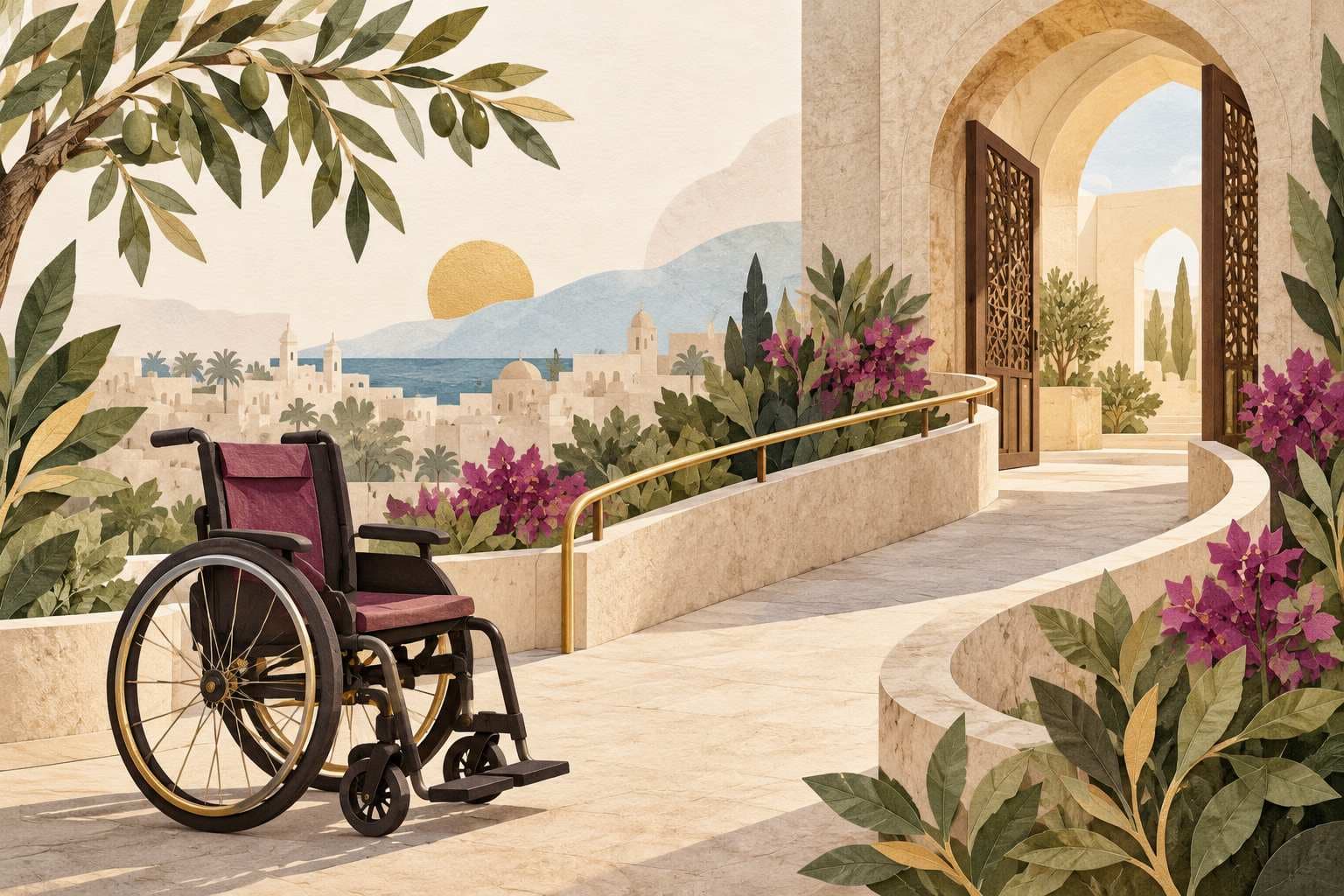
AI-generated editorial illustration; it does not document real people or field activities. Created on 24 September 2026.
What Disability Support in Gaza involves
Disability support in Gaza means being able to use a service, understand information and participate in everyday life. Someone may receive an appointment yet still be unable to enter the building or communicate with staff. Inclusion begins with those practical barriers, alongside a person’s health needs.
WHO’s disability fact sheet explains how health conditions interact with environmental factors. Mobility, sensory, cognitive and communication needs differ; designing around one visible disability can exclude others.
An assistive product is part of a service
WHO’s assistive-technology guidance covers wheelchairs, hearing aids, glasses, white canes and communication technologies, together with the systems and services that make them useful. Needs vary by person and activity; a single product is not a universal solution.
The purpose is participation: reaching a lesson, communicating or carrying out personal tasks. Appropriate provision requires trained personnel and user involvement. Donating a device without considering the person and supporting service does not establish that the need is met.
Hearing and communication affect safety and learning
In its 26 May 2025 account of hearing-aid support, UNICEF described children in Gaza struggling to hear family members and classroom lessons after devices were lost or unavailable. Its partners used hearing assessments and individual fittings; the response involved more than handing over equipment.
Information delivered only through speech may not reach everyone. Hearing support can reconnect a child with relatives and learning, while battery and device shortages interrupt that connection. These dated observations are not a current inventory.
Rehabilitation should connect with ordinary life
The ICRC’s rehabilitation programme description brings together mobility products, professional training, continuity of care and participation in education, work and community activities. This is a broader aim than completing a procedure or recording a distribution.
Progress might mean moving around a home, returning to study or joining a social activity. Those goals belong to the person. Physical rehabilitation and mental-health support can form part of coordinated care provided by qualified teams.
Aseel’s experience: recovery with a personal goal
An ICRC story published on 23 April 2026 follows Aseel, a young woman in Gaza who lost a leg while displaced. Rehabilitation and a prosthesis supported her preparation for her wedding. The team worked toward an event she valued, while she continued facing the difficulties of living in a tent.
Recovery involves personal plans, confidence and living conditions alongside a device. This is the ICRC’s account, not a TAZC case. One person’s experience does not establish care availability for everyone.
People with disabilities must shape the response
In an update dated 29 August 2025, WHO reported a meeting with Palestinian disability organisations. Representatives raised barriers to health services and medical evacuation, limited assistive technologies, and the need to include disability in health-system rebuilding.
Their involvement offers a practical direction for inclusive planning:
- Discuss access and communication with service users.
- Include women with disabilities and people with ongoing health conditions.
- Build inclusion into recovery plans from the beginning.
Children need a say in their future
UNICEF’s 24 February 2026 briefing on The Gaza We Want described safe, voluntary activities involving children, including children with disabilities. They used drawings, stories and other forms of expression to describe priorities such as safety, homes, schools, healthcare and play.
Children’s preferences belong alongside assessments of support needs. Listening need not require reliving violence or publishing a personal story. Participation can begin with choices about learning, friendships and accessible places to play.
Frequently asked questions
Is disability support limited to wheelchairs or prostheses?
No. Access also involves communication, usable facilities, learning, personal choice and participation. Support should reflect the individual rather than an assumed diagnosis or a single product.
Does TAZC provide disability or rehabilitation services in Gaza?
This article does not describe such a TAZC service. The charity’s documented Gaza programme is food parcel distribution. Consult the programme page and contact TAZC about its actual scope.
Keep inclusion visible
Disability support in Gaza deserves attention that respects people’s choices and everyday ambitions. Continue reading about healthcare in Gaza and children’s access to learning. Share verified information and support clearly described work without attributing unverified services to an organisation.
Editorial review: 24 September 2026. Dated examples describe their publication periods. Sources are background evidence and do not imply a partnership with TAZC.
From reading to impact
Explore our active programs and choose how to support them. Completed programs and their photographs remain part of the charity’s archive.
Donate Now